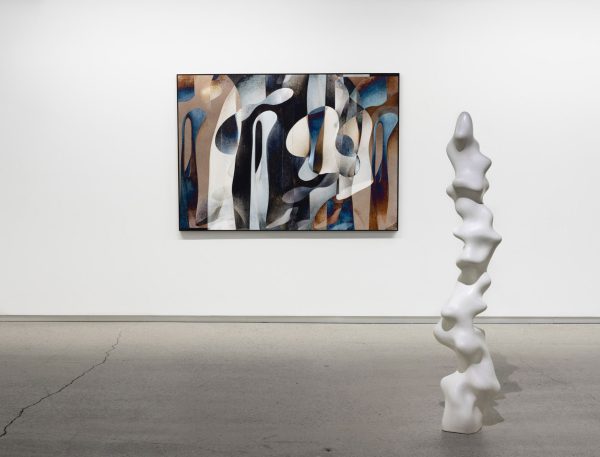
Triste Entropique
Triste Entropique – a series of sculptures that give shape to the invisible: dissipated energies, energy lost, autocombustion. These volumes, inspired by fluid mechanics, rise like smoke drifting from human architectures, revealing the ghostly traces of our activity. A sacrificial shaping of the secondary effects of our modernity.
For a complete list of works and titles, please refer to the Blouin Division website: Triste Entropique, Montreal, 2025 et Triste Entropique, Toronto, 2026
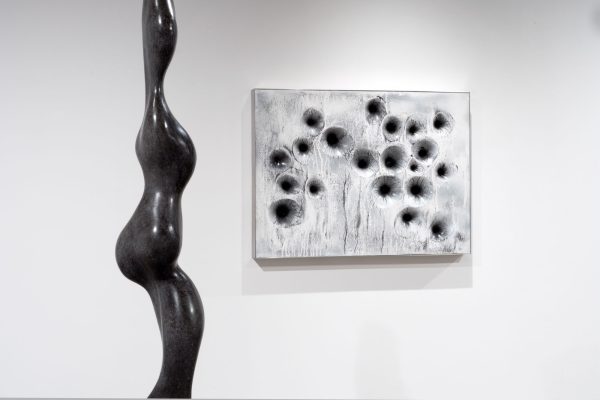
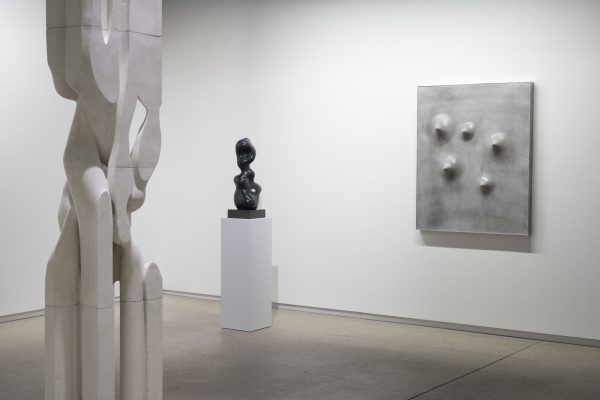
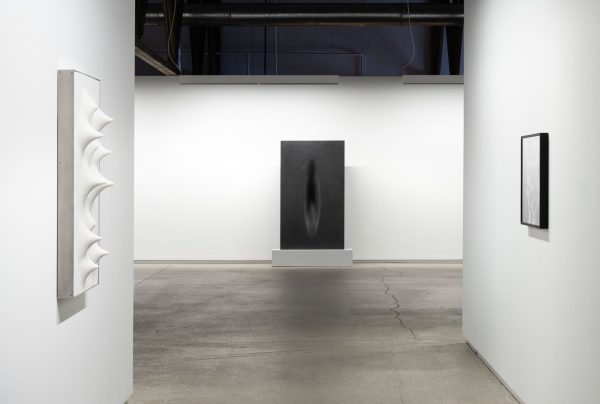
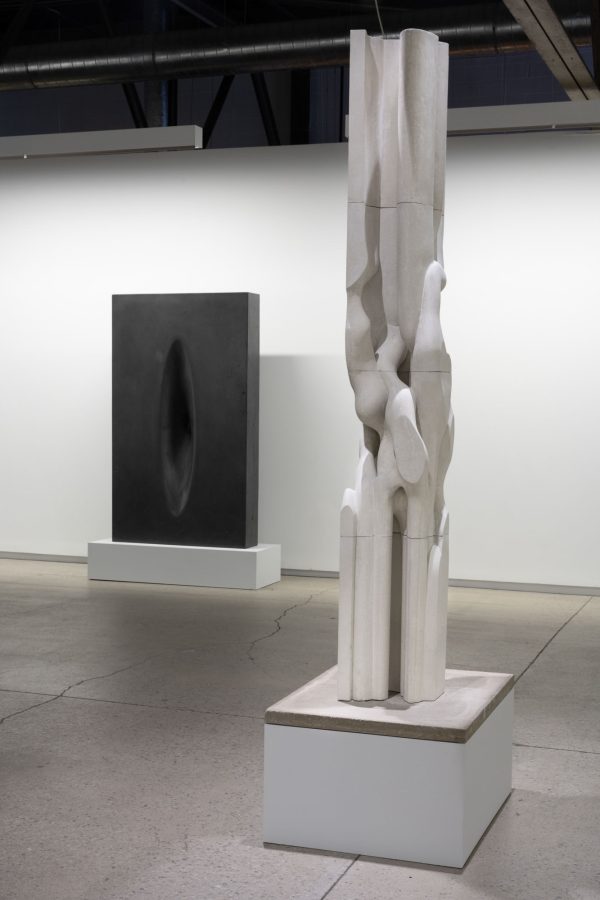
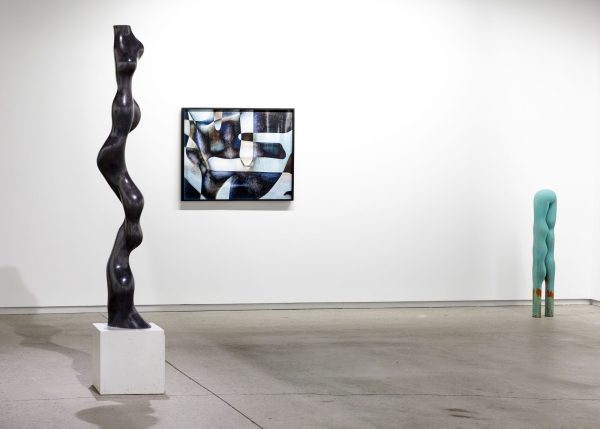
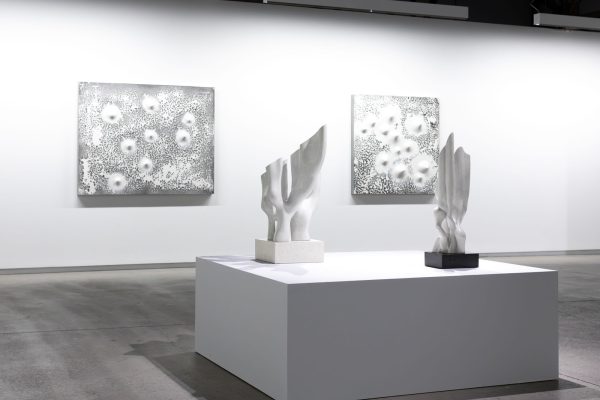
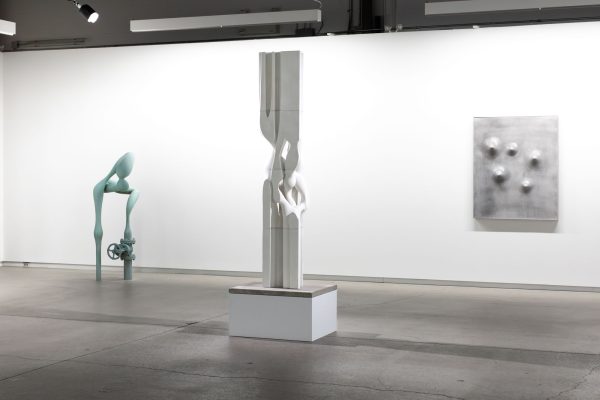
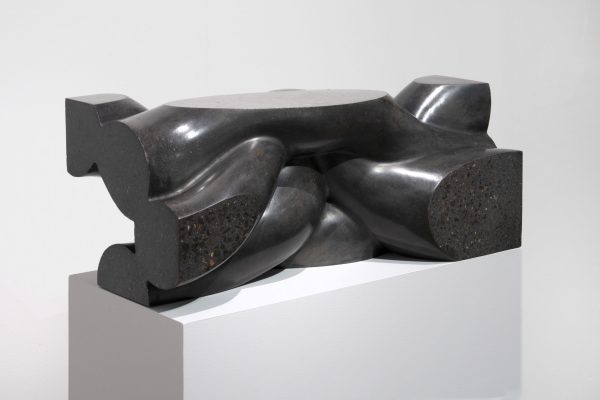
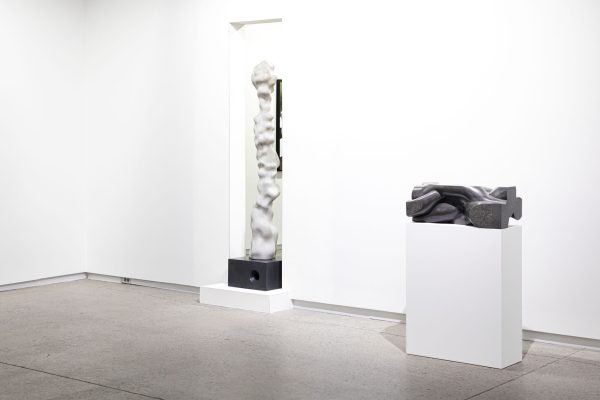
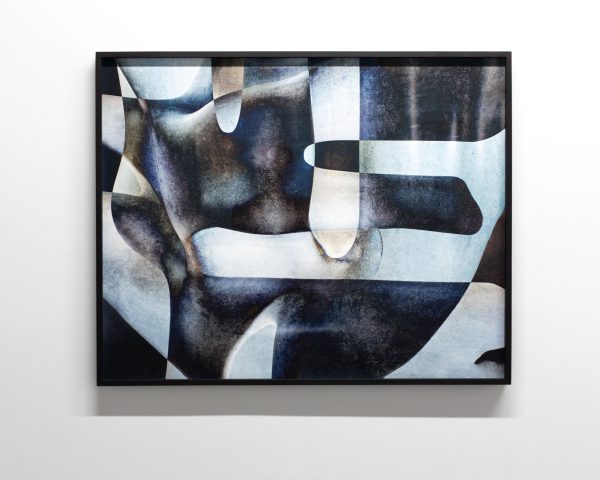
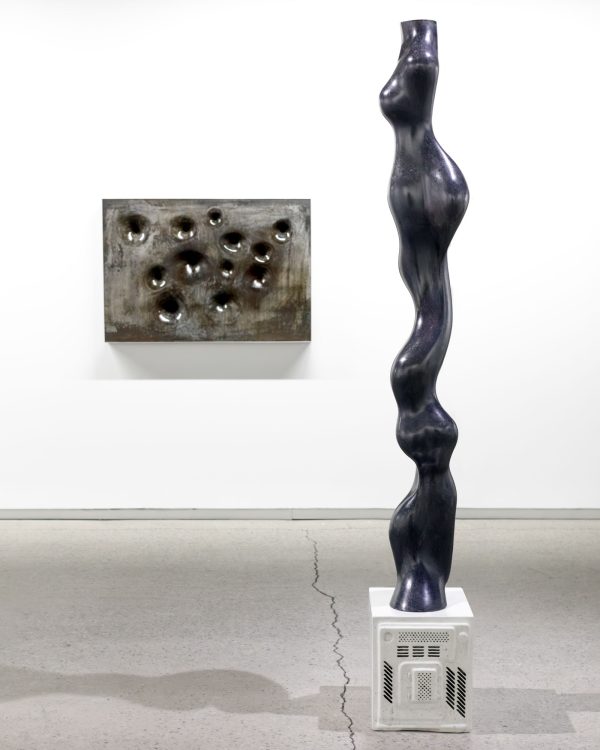

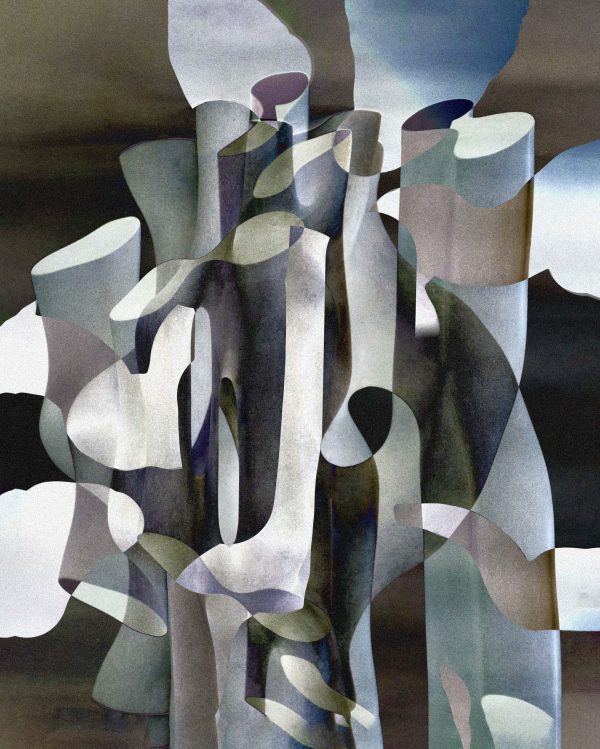
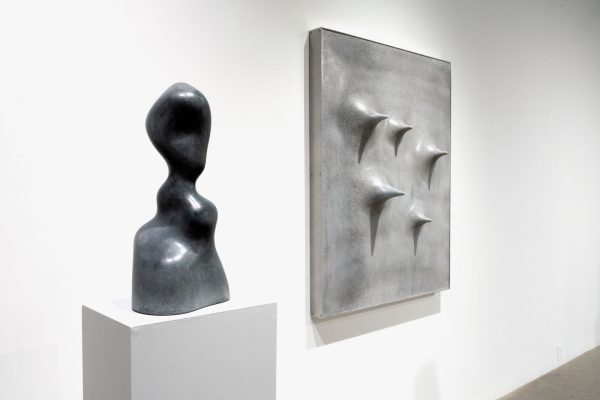
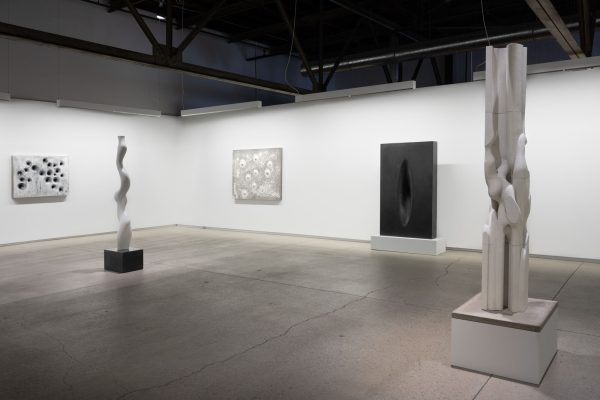
With Triste Entropique, Michel de Broin reveals a series of new sculptures and image-based works
that stand as monuments to a dissipated world. Idols of exhaust, of exhaustion, they condense
aethereal flux into mineral form. Dissolution and intensity, erasure and effusion flow as an
undercurrent through the exhibition’s material surfaces, which affix these forces for a moment in
time and space.
One might envision the works of Triste Entropique as though they were antiquities unearthed from
the archaeological site of an extinct civilization whose demise we must infer. Perhaps these remnants
enshrine the material decadence and infrastructural insufficiency that facilitated that civilization’s
cultural demise. Perhaps these excavated items once stood as icons beloved by a society dedicated to
the complete exhaustion of their natural world. Perhaps they were the ritual objects of an annihilistic
sect who celebrated the sacrifice of energy and who craved to bring their fractured civilization into a
burning immanence with the sun.
Here, the etymology of entropy (from the Greek, en + tropē, meaning within + transformation) resonates throughout de Broin’s creations. Yet the relation of these objects to the entropic world is complex, ambivalent. Though a sense of loss is palpable in these works – loss of energy, ofecosystem, of meaning – they do not dwell in deterioration. Against the grain of dispersion, disorder, and oblivion, de Broin’s sculptures suspend time, giving a sensual presence to expenditure, and stand as a testament to our ephemeral existence.
+
In De rerum natura (ca. 55 BCE), the Roman poet and philosopher Lucretius articulates a universe of
perpetual change and movement. The elemental particles, he writes, merge and become interwoven;
they assume finite forms for a short duration in the eternity of the cosmos; they then disperse, deflect,
and swerve elsewhere, verging always on the edge of oblivion.
That the phenomenal world flickers, that its material fragments fasten and shift, meld and overlay,
however momentarily, that these formations come undone, bit by bit erode, drift – elsewhere, anew –
that there is an expenditure in this collisional choreography of particles, an immaterial force we
cannot account for but which endlessly sways the matter of the world – this is, perhaps, one way we
might enter the speculative terrain of Triste Entropique.
+
The title of the exhibition draws on the legacy of the French anthropologist Claude Lévi-Strauss. In
his landmark tome, Tristes Tropiques (1955), Lévi-Strauss meditates upon the array of cultural forms
he encountered during two decades of fieldwork in remote societies all across the earth. His
reflections, though charged with wonder by the sheer variety of life he encountered, are elegiac. The
complex, delicately configured structures that imbricated social existence with the natural world
were, in his view, being obliterated by the brutal and homogenizing force of Western civilization.
Wherever the supposed advance of humankind reared its head, there Lévi-Strauss witnessed the
destruction, consumption, utter exhaustion, and disrepair it carried forward.
In the book’s final passages, he writes that “anthropology,” the scientific study of humankind, should,
in fact, be renamed “entropology,” since it is truly a matter of studying processes of degradation and
disintegration. The great entropy Lévi-Strauss foresaw, as his biographer Patrick Wilcken documents,
is one that ends in a sterile uniformity, akin to what cosmologists have dubbed “heat death,” when all
temperature differentials are evened out and the universe enters a period of prolonged, perhaps
eternal, stasis.
+
Inside a hut of hay and mud, let us imagine a hologram.
In the depths of its smooth obsidian contours, which reflect and refract the immediate world, a
different dimension hovers.
There, symmetries fold upon themselves. There, shards of time superimpose upon one another.
There, a form, mineral or man, bends and distorts, emerges.
Donned in bone and feather, a miniscule lord, agog, a god of the obliterative present, arising.
It is a fume.
+
In the future artifacts of Triste Entropique, de Broin deftly apprehends the transient forms of our
contemporary. Infrastructures of mist, crude fluid coagulations, shrines to annihilated time. Busts of
smoke. Yet the forms remain conjectural. They are the speculative belongings of an anticipated
cultural regime, while also, somehow, seemingly profuse throughout the ambiences of our present
lives. This temporal uncertainty grates against the fixity of the work, prompting an exhaustion all its
own: an exhale from each object, a sigh. A hiss.
—Michael Nardone