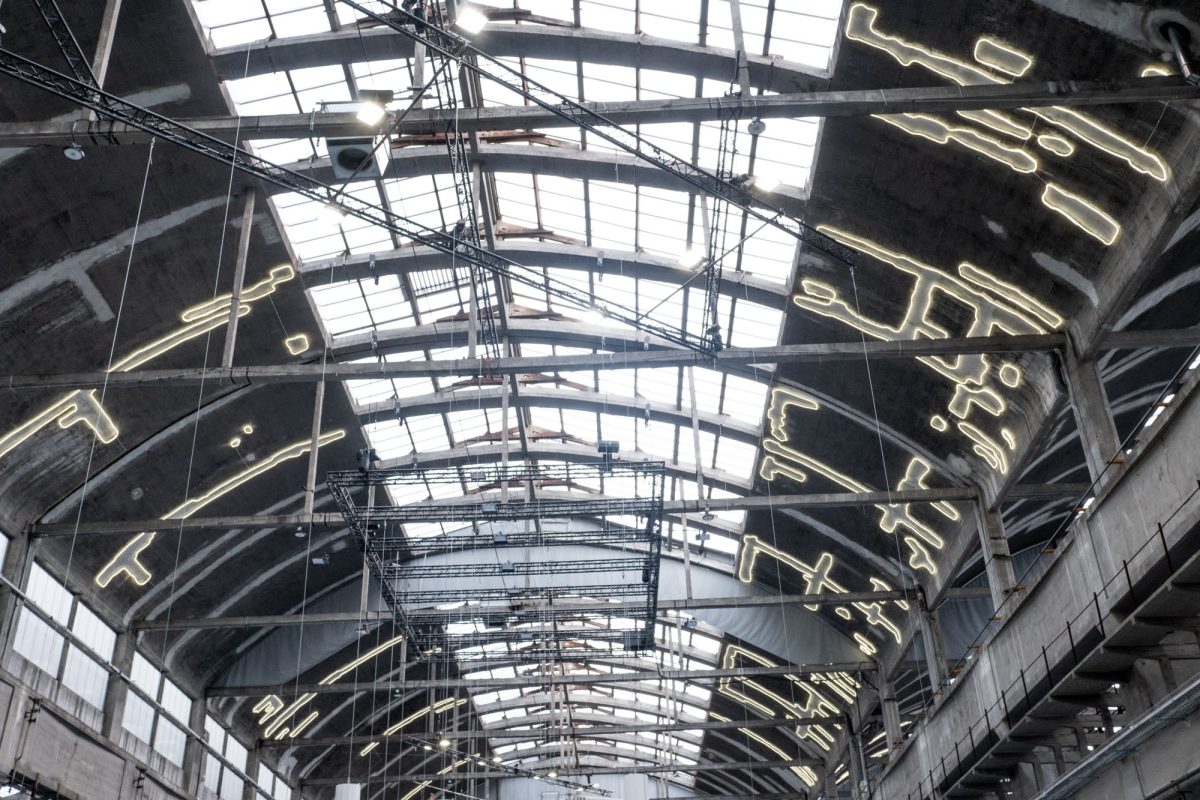
 Mortier Fati – Lines of Light [2024]
17th Lyon Biennale, Les Grandes Locos, Lyon, France.
Spanning the vaulted ceiling of the building, the work follows the cracks and traces of repair that run across its structure. By revealing these architectural scars, the installation transforms the marks of time into a vast drawing of light that celebrates resilience, transformation, and the beauty of imperfection.
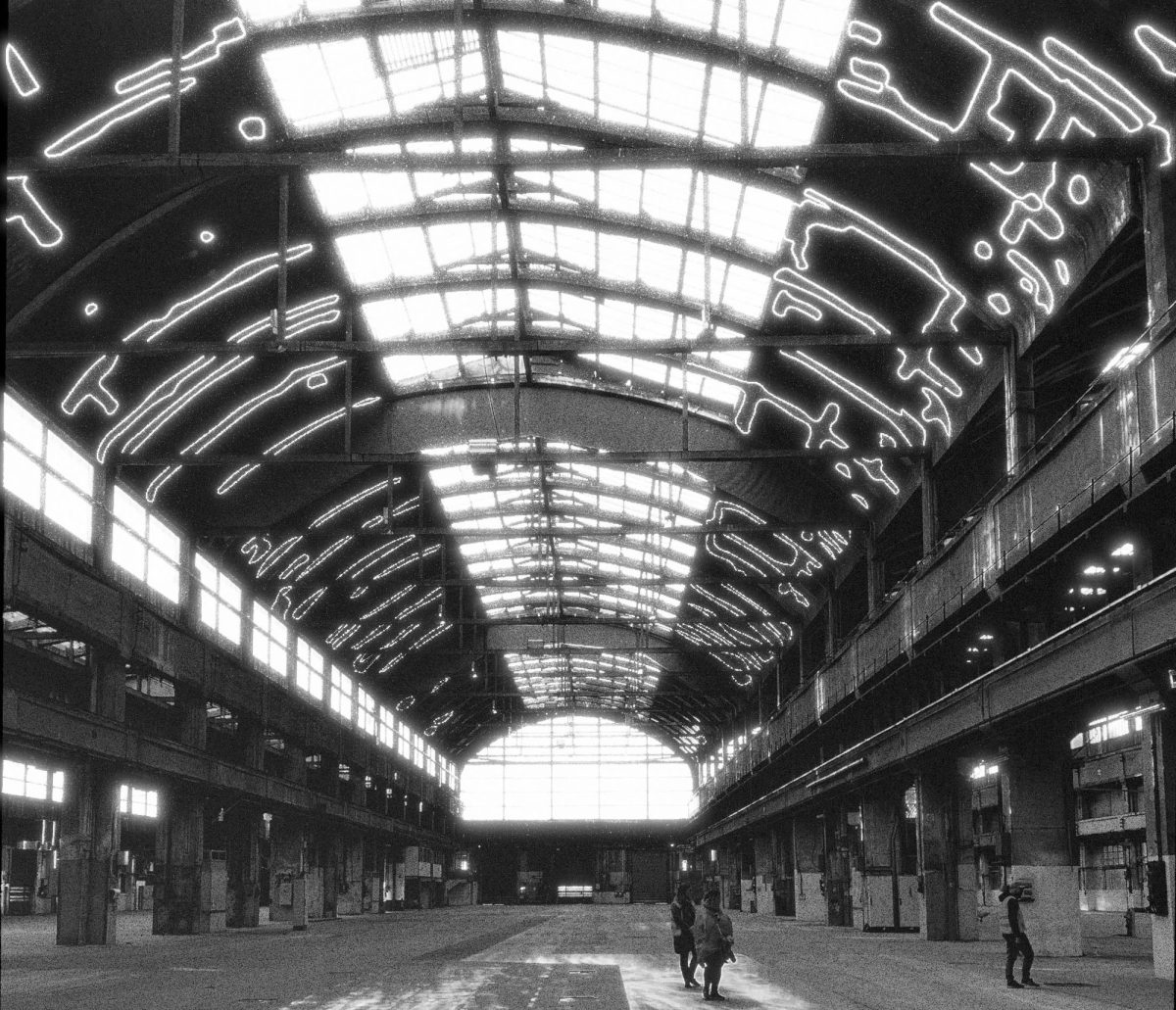
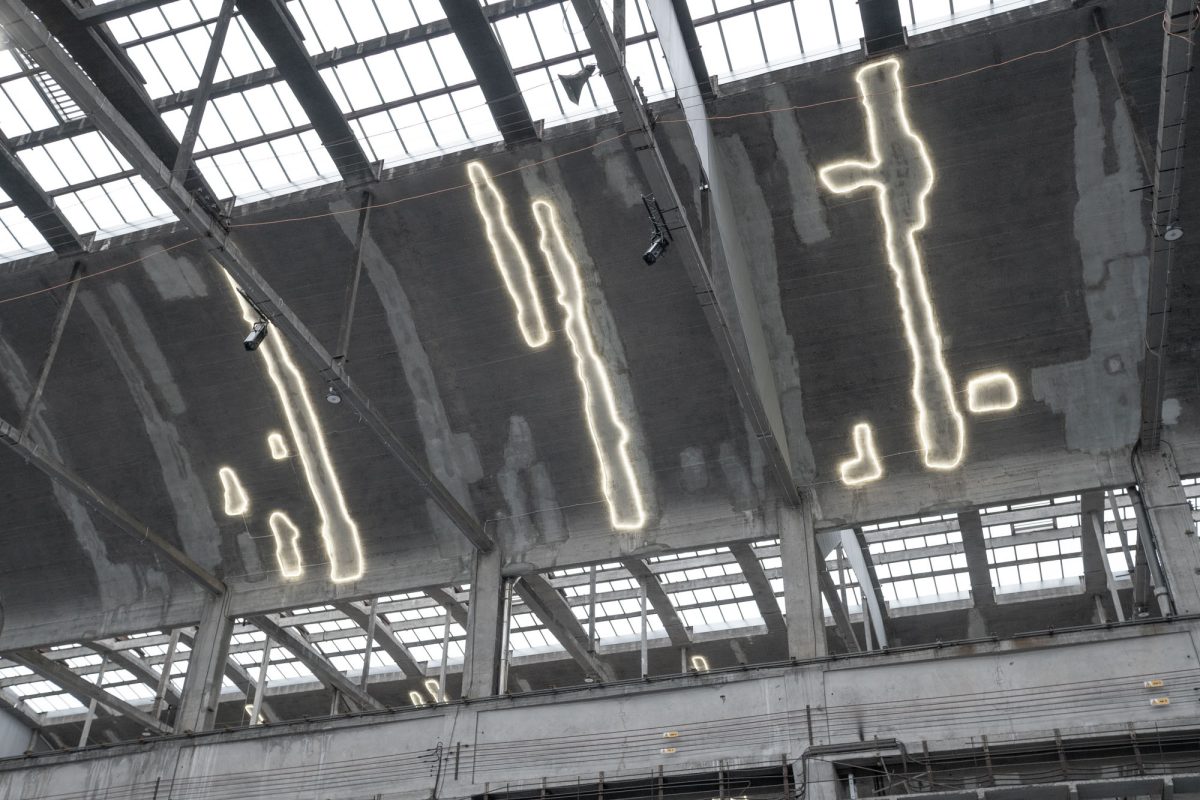
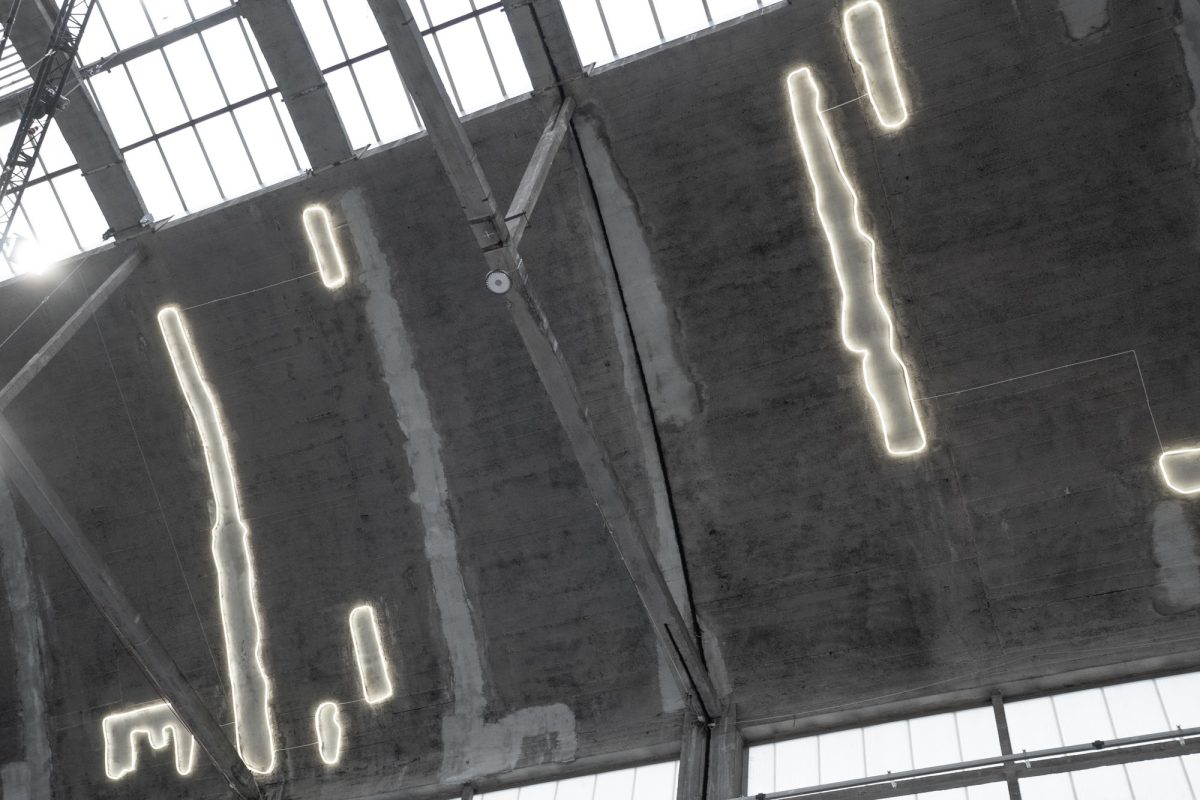
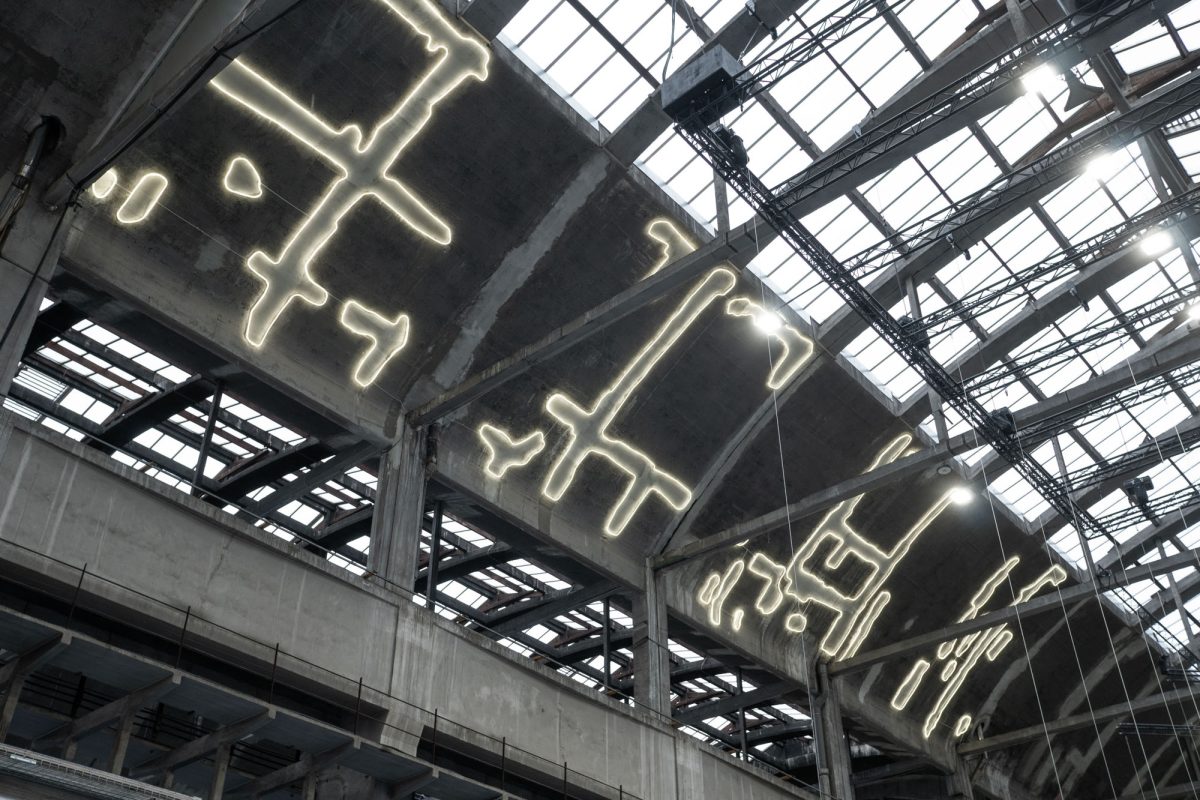
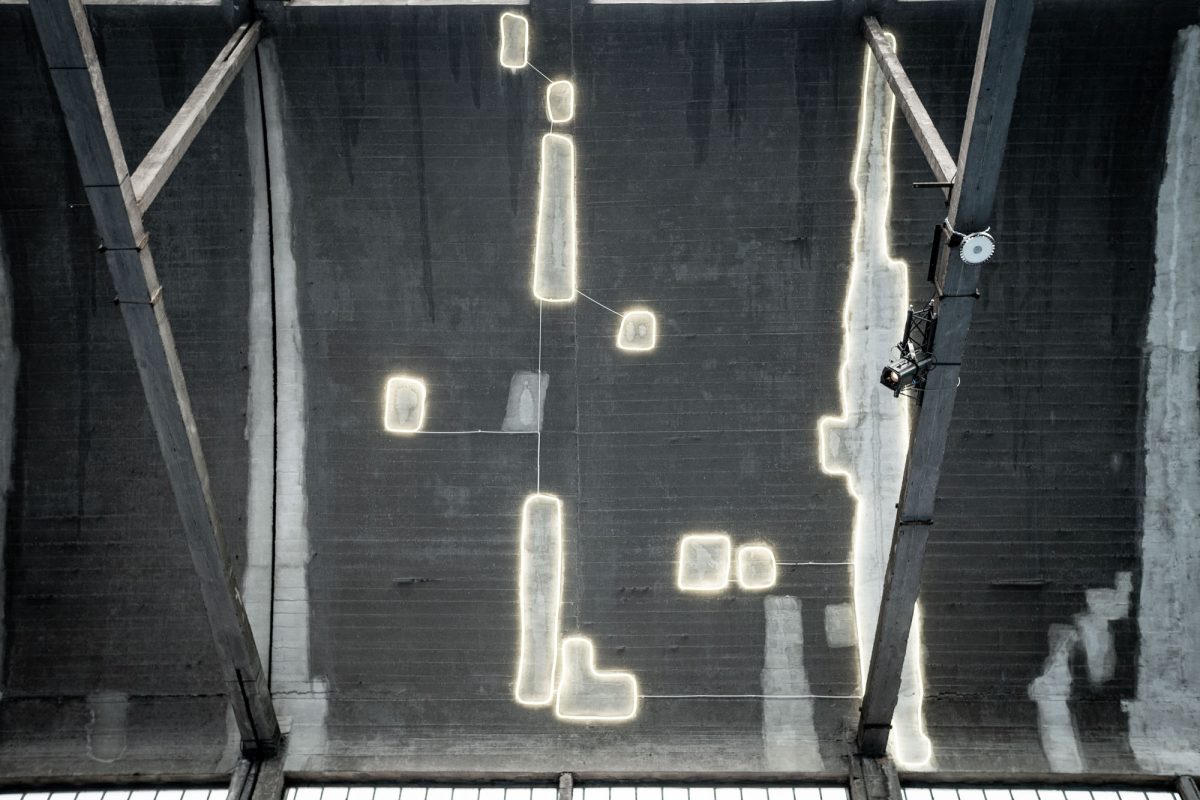
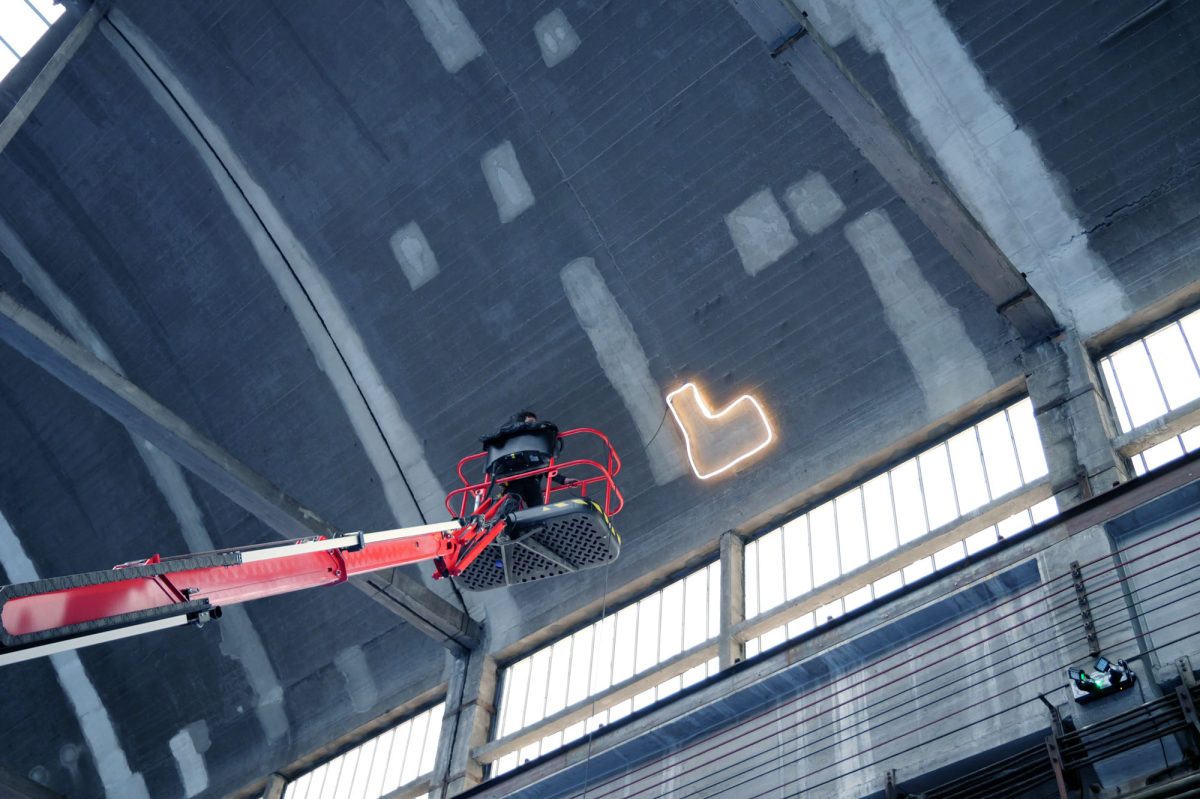
Created for the 17th Lyon Biennale, Mortier Fati – Lines of Light reveals the traces of repair that run across the vaulted ceiling of Les Grandes Locos in Lyon, disrupting the rigorous geometry of its architectural grid. By emphasizing these fractures rather than concealing them, the project draws inspiration from Nietzsche’s notion of Amor Fati, the love of fate. Nietzsche invites us to embrace and affirm all that happens to us, including the accidents, wounds, and imperfections that shape our existence. The intervention transforms the building’s scars into precious aesthetic elements, making alteration a source of beauty rather than a flaw to be corrected. During my first visit, I was struck by the presence of these fracture lines crossing the vault of this immense industrial cathedral for nearly one hundred meters. Bearing witness to the movements of matter, structural stresses, and successive human interventions over time, they create an unexpected landscape above the visitors’ heads. By illuminating these traces, the work encourages viewers to look upward toward this monumental architecture and discover a vast drawing suspended in space, a luminous fresco composed of the marks left by time. The lines of light follow the contours of cracks, bifurcations, and repairs, revealing the natural and human forces at work within the building’s material fabric. These alterations testify both to the power of geological processes that deform structures and to the patient labor of the masons who repair them. Together, these forces generate striking drawings that emerge spontaneously from the rigidity of the architectural grid. The fractures introduce diagonals, bifurcations, and unpredictable trajectories that disrupt established order and generate new forms. The work thus becomes an invitation to move beyond our attachment to predictable outcomes and to accept the fundamental uncertainty of existence. By revealing the formal richness produced by accidents, transformations, and successive repairs, Mortier Fati celebrates the resilience of matter and the capacity of things to reinvent themselves. Every crack and every act of repair become visible traces of a history in motion, where imperfection fully contributes to the singularity, memory, and beauty of the world.
Le Journal des Arts
“(…) One can read in it an allusion to the workers’ union struggles that once took place in this site. Michel de Broin’s luminous installation magnifies the traces of wear preserved in the vaults, inscribing directly into the architecture the incandescent and indecipherable writing of time. (…)”
“(…) The works of Quebec artist Michel de Broin—light garlands tracing the hastily patched repairs scattered across the hall’s ceiling—bear witness to the end of a once-thriving industrial activity and to the disappearance of the working population that carried its rich history. (…)”
Fisheye Immersive
“(…) Lines of Light is an interactive light installation designed to respond to the movements of visitors. Luminous energy lines draw ephemeral patterns in the air, creating abstract and dynamic figures. Through this work, Michel de Broin explores the relationship between human beings and technology, and the way we perceive the world through light and movement. A successful achievement. (…)”
ARTnews
“(…) At Les Grandes Locos, make sure to look up at the building’s vaulted ceiling, which is starred with neon lights as a way to highlight recent repairs. This installation by Canadian artist Michel de Broin (b. 1971) shows the tension between the venue’s architectural grid and the geological forces that have been altering it since its inauguration in 1846. “By cementing the building’s cracks and scars, stonemasons have generated an alphabet of shapes, which I approached as pictorial motifs,” de Broin told ARTnews, adding that his project aims to celebrate the beauty of imperfections. “All I had to do is cut out the fruit of their interventions with fine lines of light.” Titled Mortier Fati – Lignes de lumière (Fati Mortar – Lines of Light), the sculpture refers to mortar, that mixture of cement, lime, sand and water which binds constructions together, as well as to the Nietzschean notion of amor fati (love for fate), an encouragement to embrace our destiny rather than to fight the inevitable. (…)”
Le Monde
“(…) The weathered condition of the building becomes a source of inspiration for Michel de Broin, who has created an unusual neon calligraphy across the entire vault, highlighting the lighter areas where the concrete has been repaired. (…)”
Libération
“(…) Suspended beneath the immense concrete arch, Michel de Broin’s intervention appears to mend the structure with neon light, recalling the Japanese practice of kintsugi. (…)”
“(…) Quebec artist Michel de Broin (born 1970) has outlined them with white neon lights. These not only emphasize the cracks but even beautify them, embodying a form of visible restoration reminiscent of the Japanese practice of kintsugi, in which gold is used to fill the fractures of ceramics in order to repair them. Better still, because their shapes are random and aligned along the skylights, they resemble an indecipherable script—a poem of neon and concrete without beginning or end, a pure delight for the aesthete. It is a remarkably seductive and intelligent idea, one that resonates with the history of this former railway maintenance center, where locomotives were repaired for decades. (…)”